The Arc'teryx Descent Line was a dedicated snowsports collection that ran from 2001 through the mid-2000s. Arc'teryx spent 18 months building it before anyone saw a single jacket. The company hired Tom Routh, a backcountry rider with no interest in half-measures. His job: solve problems the snowsports industry had been ignoring. The result was a lineup of hardshells, hybrids, and insulated parkas that premiered at Arc'teryx's first ski and snowboard trade show in 2001. The Sidewinder SV became a top seller almost immediately. Powder Magazine and Transworld Snowboarding ran features. A climbing brand had crashed the big mountain party, and the core community welcomed it.
What Was the Arc'teryx Descent Line?
The Arc'teryx Descent Line covered eight distinct models split across three roles. The 2003 catalog lists uninsulated shells (Sidewinder, Javelin), insulated parkas (Patriot), and reinforced pants (Minuteman). Two hybrid versions rounded out the lineup.
Every piece shared a relaxed fit designed for how skiers and snowboarders actually move. That was a deliberate departure from the trim alpine cuts Arc'teryx built its reputation on. The Innovation Handbook, an internal document covering Arc'teryx's design history, describes the big mountain market as "historically unforgiving." It notes the core was "initially skeptical" of a climbing brand entering their space. Arc'teryx won them over with construction details no one else was using: laminated powder skirts, 1/16-inch seam allowances (four times tighter than industry norms), and tiny 13mm Gore seam tape.
Arc'teryx Descent Line Flagship: The Sidewinder SV
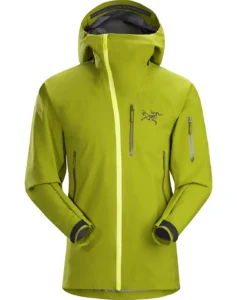
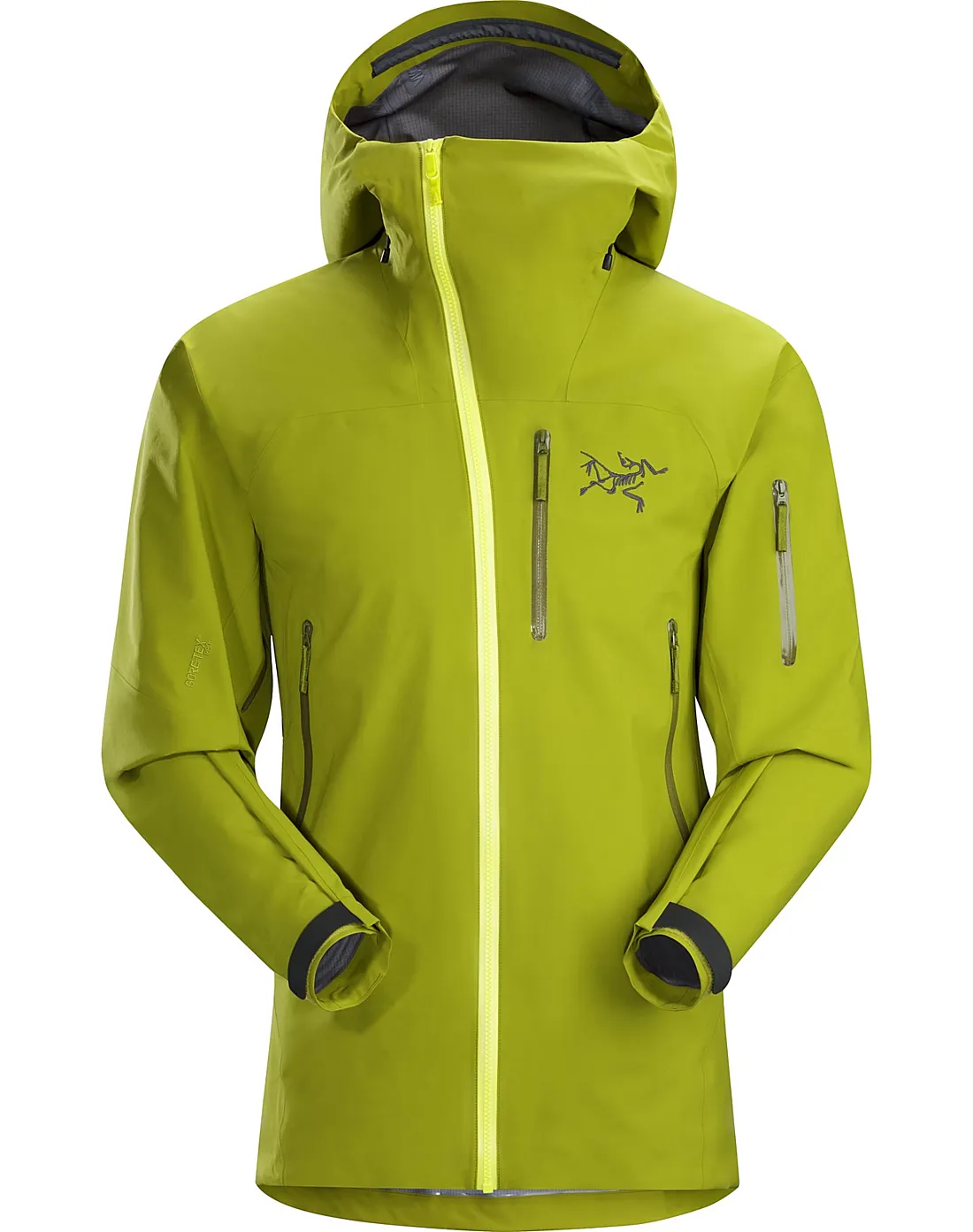
The Sidewinder SV was the flagship. It weighed 656 grams for a men's medium. Arc'teryx built it from 420NR and 540N 3-layer Gore-Tex xcr fabric. The defining feature was the curved WaterTight zipper, which moved the slider away from the chin. Every skier knows that zipper scrape. Arc'teryx's Innovation Handbook calls the curved zip the "marquee innovation" of the entire Descent program. Getting variable-radius curves to work in a waterproof zipper took multiple failed attempts before it functioned.
The SV packed a laminated Opti radio pocket (patrol-specific), a one-handed Speed Hood, and no-side-seam construction. Two pleated chest pockets with laminated zips. The women's version weighed 609 grams. Colorways: Bluebird, Citrus, Statue, and Pine.
The Sidewinder TR dropped the hood for helmet wearers. It weighed 573 grams as an unisex cut. Same Gore-Tex xcr, same curved zip, same pocket layout minus the hood. "TR" likely stood for Tram, matching the catalog copy about "lapping the tram."
Javelin SV and AR: Gore-Tex Soft Tech
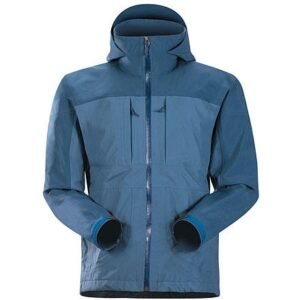
The Sidewinder usedXCRr. The Javelin used Gore-Tex Soft Tech instead. Soft Tech was quieter and more pliable so that it wouldn't crunch in cold temps. The Javelin SV weighed 682 grams in men's M with a full hood, relaxed fit, and 450N 3-layer construction. The catalog describes it as built for "first tracks to patrol sweep."
The Javelin AR was the hoodless version at 614 grams. "AR" meant All Round, even back then. The hoodless design lets you easily swap between helmets and toques. Both Javelins ran Cherry, Dark Citrus, and Gargoyle colorways.
By 2004, the Javelin Comp joined as a hybrid. It paired PTFE waterproof panels with Schoeller Dryskin and a brushed interior. The Sidewinder Comp used Schoeller Dynamic Extreme and kept the curved front zip.
Patriot SV and AR: Insulated Parkas
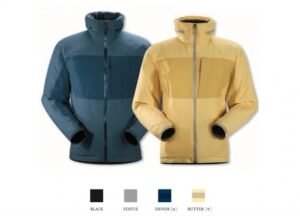
The Patriot was the warmest piece in the Arc'teryx Descent Line. The SV weighed 1,038 grams (men's M). It combined a 2-layer Gore-Tex xcr with 200 g/m² PrimaLoft insulation. Heavy by today's standards. But in 2003, a fully waterproof, insulated parka with non-quilted construction was rare. No quilting meant no cold spots at stitch lines.
The Patriot AR came in lighter at 929 grams. It used 133 g/m² PrimaLoft with 2-layer Gore-Tex xcr in 400N and 540N fabrics. Arc'teryx called it "a packable companion for stop-and-go big mountain missions." Both models featured a stow hood, laminated powder skirt, and internal goggle pocket. The 2004 catalog confirmsthat both Patriot jackets continued alongside the Minuteman.
Minuteman Pant and Bib
The Minuteman handled the lower half. The Pant weighed 584 grams (men's M). It used 540N and 630N 3-layer Gore-Tex xcr with Schoeller Keprotec instep patches. That Keprotec detail matters. It resisted abrasion from the inside edge and the high back that destroys ski pants from the ankle up. The Pant came in short, regular, and tall inseams.
The Bib version weighed 721 grams. It added a low-cut bib with a drop seat and quick-adjust suspenders. Same Gore-Tex xcr and Keprotec construction. Both featured WaterTight zippers throughout, articulated knees, powder cuffs, and roomier leg circumference than Arc'teryx's climbing pants. The Rush Pant carries forward the same DNA today: Gore-Tex Pro, Keprotec insteps, side vents, and articulated patterning.
From Descent to Rush and Sabre
The Descent names disappeared by the late 2000s. Arc'teryx consolidated its snowsports lineup under new names. The Rush line replaced the Sidewinder as the technical freeride shell. The Sabre took over the Javelin's role as the relaxed resort option. Sentinel handles the women's side. By FW2025, the catalog lists Rush Jacket, Rush Bib Pant, Sabre Jacket, Sabre SV Jacket, Sabre Bib, and Sabre Pant. The North Face and Norrona build competing freeride shells, but neither traces its ski program back to a climbing brand's R&D lab.
The curved zipper didn't survive the transition. Modern Rush and Sabre jackets use straight WaterTight zippers with laminated chin guards. But the laminated powder skirts, Keprotec pants, relaxed fit, and pit zip ventilation all trace back to Tom Routh's team.
The Sphene Jacket from the Whiteline collection represented another branch of Descent thinking. Minimalist backcountry shells stripped to essentials. That model ran its course, too. What remains is a snowsports program built on credibility, the Sidewinder, Javelin, Patriot, and Minuteman earned when a climbing brand proved it could build ski gear worth trusting.