
Arc'teryx Alpha SV Jacket

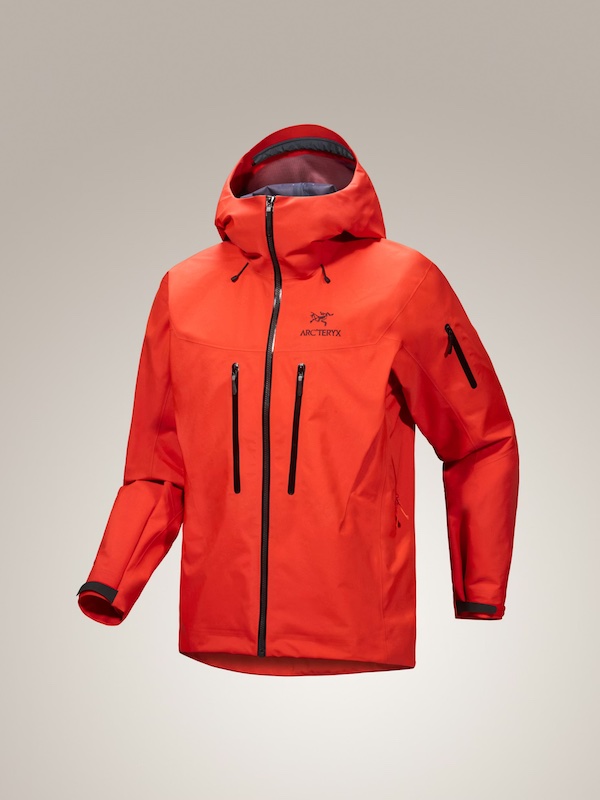
The Arc'teryx Alpha SV Jacket weighs 485 grams in a men's medium and uses 100-denier 3-layer GORE-TEX PRO ePE throughout. Model X000009899. $900. SV stands for Severe Weather, and this is the most abrasion-resistant shell Arc'teryx produces. It has been in continuous production since 1998, making it one of the longest-running technical shells from any manufacturer. The current version switched to a PFAS-free ePE membrane with an FC0 DWR finish and added two internal dump pockets that previous versions lacked.
At just over 6 feet and 165 pounds, I'd wear a size L based on Arc'teryx's sizing chart. The regular fit is designed to leave room for a midlayer fleece and a thin insulator underneath. The 100D face fabric is noticeably stiffer and more substantial than the 40D or 70D materials on lighter Arc'teryx shells like the Beta SL. Reviewers consistently mention the crinkle. It's loud in quiet environments, and that's the trade-off for a fabric that handles direct rock contact without tearing.
100D GORE-TEX PRO ePE Fabric
The 135 gsm recycled nylon plain-weave face fabric is the thickest in Arc'teryx's current shell lineup. Gore developed the ePE membrane with Arc'teryx as the lead partner, and this version removes all intentionally added PFAS from both the membrane and DWR coating. The FC0 finish beads water on contact. Switchback Travel's testers wore it through sustained Pacific Northwest rain and reported the DWR held without wetting out across full days.
The 100-denier construction means this jacket can handle direct contact with granite, ice screws, and crampon points without the anxiety you'd feel in a lighter shell. Alpinist's review described it as "the armored tank of rain shells." The downside is breathability. At 100D, the fabric breathes noticeably less than the thinner GORE-TEX Pro on the earlier Alpha SV versions or the lighter Alpha AR. Pit zips help, but on warm, high-output approaches, testers report it runs hot.
How Does the Alpha SV Fit for Climbing?
The articulated patterning is the reason this jacket costs $900. Arc'teryx uses e3D construction that adds material at the shoulders and elbows, letting climbers reach overhead without the hem riding up. Ice climbing positions, high steps, and overhead tool placements don't pull the jacket out of a harness. GearJunkie's tester, who is 6 feet and 170 pounds, confirmed the same experience in Alaska: the jacket never exposed his wrists or grabbed his shoulders during sustained ice climbing.
The StormHood rotates with the climber's head rather than covering their eyes when looking up. That parallelogram geometry has been on the Alpha SV since 2013. and reviewers confirm it works with every major climbing helmet. A single rear drawcord snugs the hood down when helmetless. With the collar fully zipped and the hood cinched, only the nose and goggles stay exposed. Velcro cuffs seal over undercuff gloves or tuck under gauntlet mitts.
The center back length measures 78cm (30.75 inches), which keeps snow and drafts out when bending or skiing. The hem drawcord adjusts from inside the hand pockets. so glove removal isn't necessary.
Pocket Layout and the New Dump Pockets
The 2025 revision added two internal dump pockets sized for gloves or a toque, plus a zippered security pocket for phone or wallet. These sit behind the two harness-compatible chest pockets on the exterior. The chest pockets use a pleated box design that expands for volume without protruding when empty. A left bicep pocket holds a RECCO reflector.
All external zippers are WaterTight. Switchback Travel's reviewers trusted them enough to carry phones in the chest pocket during rain without a dry bag. The WaterTight zipper took Arc'teryx close to 15 years to develop fully, starting with the original Alpha SV in 1998. The current version runs smoothly with gloves on, and the custom TPU zipper pulls are easy to grab by feel.
Alpha SV vs. Beta SV: Which SV Shell?
The Beta SV Jacket returned in February 2026 after a three-year absence. At 480 grams and $800, it's 5 grams lighter and $100 cheaper than the Alpha SV. Both now use 100D GORE-TEX PRO ePE. The Beta SV adds a two-way front zipper and drops the bicep pocket.
The real difference is fit and intended use. The Alpha SV is cut for climbing, with articulated shoulders and elbows that accommodate overhead movement. The Beta SV runs a more general mountaineering cut that works across skiing, hiking, and climbing without the climbing-specific articulation. If you're primarily an ice climber or alpinist, the Alpha SV's e3D patterning justifies the extra $100. For backcountry skiing or general severe-weather use, the Beta SV covers the same ground at a lower price.
Not a Three-Season Rain Shell
The Alpha SV is overkill for most hiking trips, day hikes, and casual use. At 485 grams and $900, it's nearly three times the weight and four times the price of a basic rain jacket. The 100D fabric doesn't pack small. Stuffing it into a daypack alongside climbing gear requires creative packing. And thestiff fabric doesn't compress as much as a lighter shell.
This jacket makes sense for ice climbing, alpine climbing, expeditions, and sustained skiing in harsh conditions. If you're standing at a belay in a snowstorm for 30 minutes, or traversing an exposed col in horizontal sleet, the Alpha SV is where you want to be. For maintained trails in moderate rain, a Beta SL at 340 grams does the job at a third of the price.
The Norrona Trollveggen Gore-Tex Pro Light is the closest competitor, offering similar Pro-level protection at a lighter weight. OutdoorGearLab rates the Trollveggen as their top overall hardshell for its versatility advantage.
Built in Canada, 259 Minutes Per Jacket
The Alpha SV is still built at Arc'teryx's ARC'One facility in North Vancouver. Each jacket requires 217 individual construction steps. Seven steps go into the hood brim alone. It's one of the last technical shells from any major brand to be fully manufactured in Canada. and Arc'teryx's warranty and repair team feeds failure data directly back to the design group. Hence, each generation addresses specific breakdown points.
Verify authenticity by checking the CA 34438 care tag on genuine products. The Alpha SV is one of the most counterfeited jackets in Arc'teryx's lineup, and fakes often miss construction details like the taped seam width (8mm on authentic versions) and the curved front zipper geometry.
Specs
Model: X000009899 Weight: 485g / 1 lb 1.1 oz (Men's M) Material: 100D 3L GORE-TEX PRO ePE, 135gsm recycled nylon plain weave, 100% nylon backer DWR: FC0 (PFAS-free) Fit: Regular, hip length, center back 78cm / 30.75 in Hood: Helmet-compatible StormHood with RECCO reflector Pockets: 2 harness-compatible chest (WaterTight), 1 left bicep, 2 internal dump, 1 internal zippered security Zippers: WaterTight front, pit, and pocket zips with TPU pulls Sizes: XS to XXL Colors: 24K Black, plus seasonal colorways Price: $900 USD Origin: Made in Canada Activities: Ice climbing, alpine climbing, mixed climbing, and expedition
Find current availability at Arc'teryx.